

That is an ambitious request! The Umaid Bhawan Palace is truly a subject worthy of a thousand words. It is not merely a building but a living testament to a unique period of Indian history, blending royal duty, famine relief, and architectural innovation.
Here is a detailed, long-form description of the Umaid Bhawan Palace, structured to cover its compelling history, unique architecture, and modern legacy.
Umaid Bhawan Palace: The Golden-Hued Zenith of Jodhpur
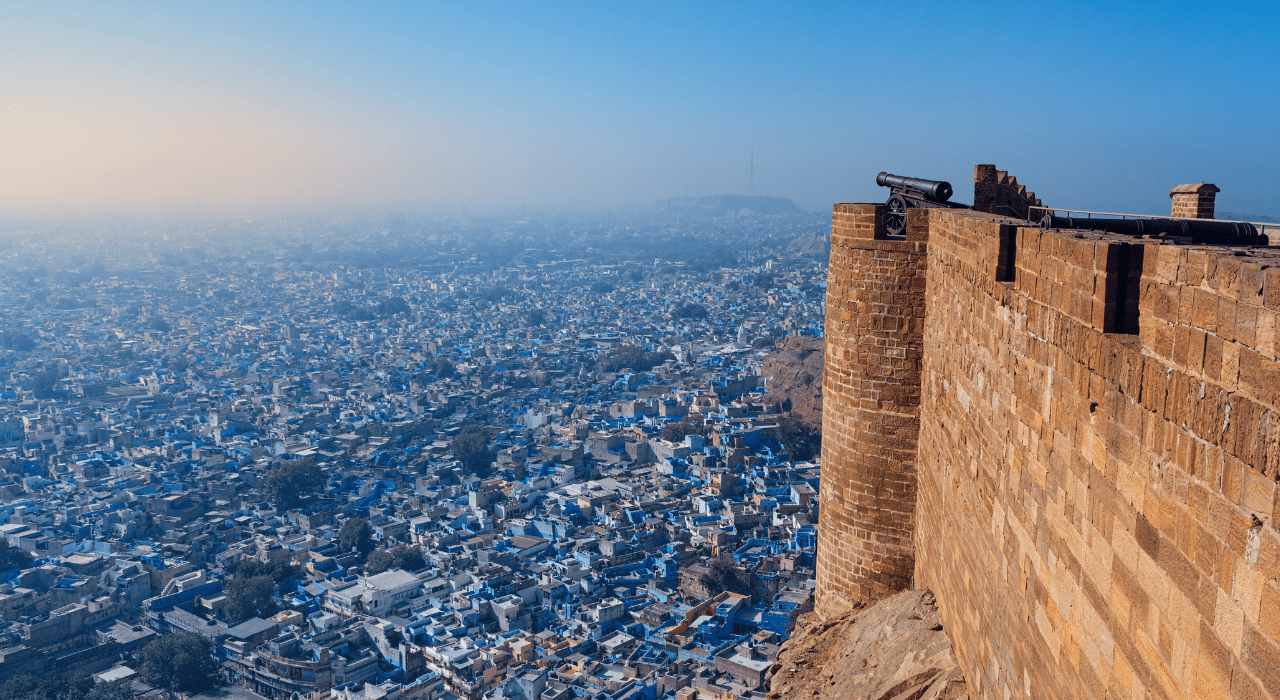
Perched high upon Chittar Hill, the highest point in Jodhpur, stands the Umaid Bhawan Palace—a magnificent, golden-yellow sandstone monument that is simultaneously a royal residence, a luxury hotel, and a museum. Often referred to simply as Chittar Palace due to its location, it is globally renowned as one of the largest private residences ever built, symbolizing the zenith of royal opulence just before India transitioned into independence.
The Compassionate Genesis: Born from Famine
The story of Umaid Bhawan Palace is unlike that of most grand palaces, which were typically constructed as fortifications or symbols of conquest. Its origin is rooted in compassion and crisis management.
During the 1920s, the Marwar region of Jodhpur was repeatedly ravaged by severe, consecutive droughts. The ensuing famine left the rural population of the state in desperate straits, with no crops and no means of livelihood. The reigning monarch, Maharaja Umaid Singh (grandfather of the present owner, Maharaja Gaj Singh II), faced a profound humanitarian crisis.
Driven by a noble desire to provide employment and sustenance to his drought-stricken subjects, the Maharaja decided to commission a massive, publicly-funded building project. The new royal residence was conceived not for immediate royal comfort, but as an ambitious famine relief measure. The foundation stone was laid in 1929, and for the next 14 years, the construction provided work for between 2,000 and 3,000 people daily, offering a vital lifeline to the populace during an era of hardship.
An Architectural Masterpiece: The Indo-Deco Style
The Maharaja commissioned the renowned British architect Henry Vaughan Lanchester, a contemporary of Sir Edwin Lutyens (who designed much of New Delhi), to draft the palace plans. The resulting design is a brilliant and eclectic fusion of Eastern and Western architectural sensibilities:
1.The Royal Residence
A major wing of the palace remains the principal and private residence of the erstwhile Royal Family of Jodhpur, headed by Maharaja Gaj Singh II. This section is closed to the public, preserving its function as a private home.
2.The Luxury Heritage Hotel
In 1978, faced with the high maintenance costs of such a vast structure, a wing of the palace was converted into a luxury heritage hotel, now managed by Taj Hotels. This establishment—the Taj Umaid Bhawan Palace Jodhpur—is consistently ranked among the world’s top hotels. Guests here experience the ultimate in royal hospitality, staying in exquisitely preserved suites and utilizing the palace’s grand public spaces, blending modern luxury with historical grandeur.
1.The Museum
The final section of the palace is the Museum, which is open to the public for a nominal fee. This allows visitors to experience the magnificence of the palace’s public halls and learn about the Marwar-Rathore dynasty’s history. The museum showcases:
- Royal Memorabilia: A stunning collection of artifacts, weaponry, photographs, and personal possessions of the Maharajas.
- Vintage Car Collection: A highlight for many, featuring the royal family’s impressive array of classic automobiles, including Rolls-Royces, Buicks, and other vintage models.
- The Trophy Room: Displaying the hunting trophies and taxidermy specimens accumulated by the royal family over the generations.
The Enduring Legacy
The Umaid Bhawan Palace stands as a powerful symbol of the Jodhpur royal family’s enduring connection to its people. It is a monument that was built out of necessity and benevolence, rather than just ego. It represents the last gasp of royal palace building in India before the end of the princely states.
Its sheer scale, its unique architectural harmony, and the powerful story of its creation during a time of famine ensure its place as one of the world’s most impressive and historically significant private residences.
Jainam Cabs: Your Royal Chariot
To experience the Umaid Bhawan Palace—whether for a brief museum visit or a grand royal stay—a seamless travel experience is essential.
Jainam Cabs provides:



 Home
Home 
